
Finding Rochester Residents by Record
Rochester keeps no official roll of every person living in the city. Each public system records a role instead. The assessor ties a taxpayer to a parcel. A Rochester deed links people to a title transaction. The state voter tool confirms a registration match, and court, license, and obituary records answer different questions again. Treat the record role and the date as part of every Rochester result, since a bare name can point to several people across a century.
Begin with the most specific fact you hold. A name plus a date works well. That pairing narrows a Rochester court index or a historical file, and an address leads straight to a parcel and its legal description. An older household usually surfaces faster in RPL directories, newspapers, and census material than in a current assessment record. None of these sources promises an occupancy list. People not named on a deed or printed in a directory volume simply do not appear, no matter how careful the resident lookup.
- Search Olmsted iasWorld by address, owner, parcel, or map to establish the parcel and tax-record context.
- Use the state voter tool only for a known Rochester person and its required name, birth-date, and address inputs.
- Follow a title question through the recorder's LandShark index, preserving the legal description and document date.
- For a past household, check Rochester Public Library directories, newspapers, yearbooks, and the obituary finder.
- When a public portal lacks the needed record, request it from the proper custodian or use a courthouse, library, archive, or counter fallback.
Note: Keep a source date and record role beside each name, since a later search can otherwise turn an old lead into a false claim of current residence.
Rochester Residents Records Custodians
Olmsted County splits Rochester land records across three shops. Property Records & Licensing, the assessor data system, and GIS each hold a piece. Recording & Abstracting keeps the recorded-document trail, while iasWorld presents the current certified assessment data. The district court holds court and probate files. County elections handles local election administration. For city-held records and permits, Rochester's City Clerk and Public Records Center is the right route, and picking the custodian by record type saves real time.
Recording & Abstracting
151 Fourth Street SE
Rochester, MN 55904
507-328-7670
Olmsted Property Records
151 Fourth Street SE
Rochester, MN 55904
507-328-7670
Olmsted Elections
2122 Campus Drive SE, Suite 300
Rochester, MN 55904
507-328-7650
Address-by-address work needs the Rochester street directory. There the parcel, GIS, deed, permit, and historic-address chains stay separate, which keeps a complicated street from becoming a tangle of mixed records.
Rochester Residents in iasWorld
iasWorld gives the county its fastest starting point whenever you hold an address, an owner name, or a parcel number. Four routes are offered. Address Search, Real Property Search, Advanced Search, and Map Search each return a different slice. The data reflect the last certified assessment date. No warranty attaches. The results still work well for a parcel, tax owner, situs address, mailing address, legal description, and value context, but they cannot prove who lives at a Rochester address today.
Every property record keeps two addresses distinct. The situs marks the physical site, while the mailing address shows where tax notices go, and the two can differ. An owner can be a trust or an entity. So record both labels instead of treating the mailing field as a residence, and note that the property ID and legal description bridge a modern Rochester street address to deed, plat, and map research. That bridge is the payoff.
| iasWorld route | Use it for | Rochester caution |
|---|---|---|
| Address Search | A known parcel location | Try street variants when an old name is involved. |
| Real Property Search | Owner or property research | An owner is not necessarily an occupant. |
| Advanced Search | Documented combination-search route | The full live filter list was not captured. |
| Map Search | Parcel selection and nearby geometry | Map results are current property data, not household lists. |
Note: The assessment snapshot in iasWorld fixes a useful starting date, not a promise that every displayed field reflects a current living arrangement.
Rochester Parcel Search in View
The county gate is the Olmsted property search. Start with a house number and street. Then compare the property ID, owner or taxpayer label, situs, mailing address, and legal description before moving to another system.
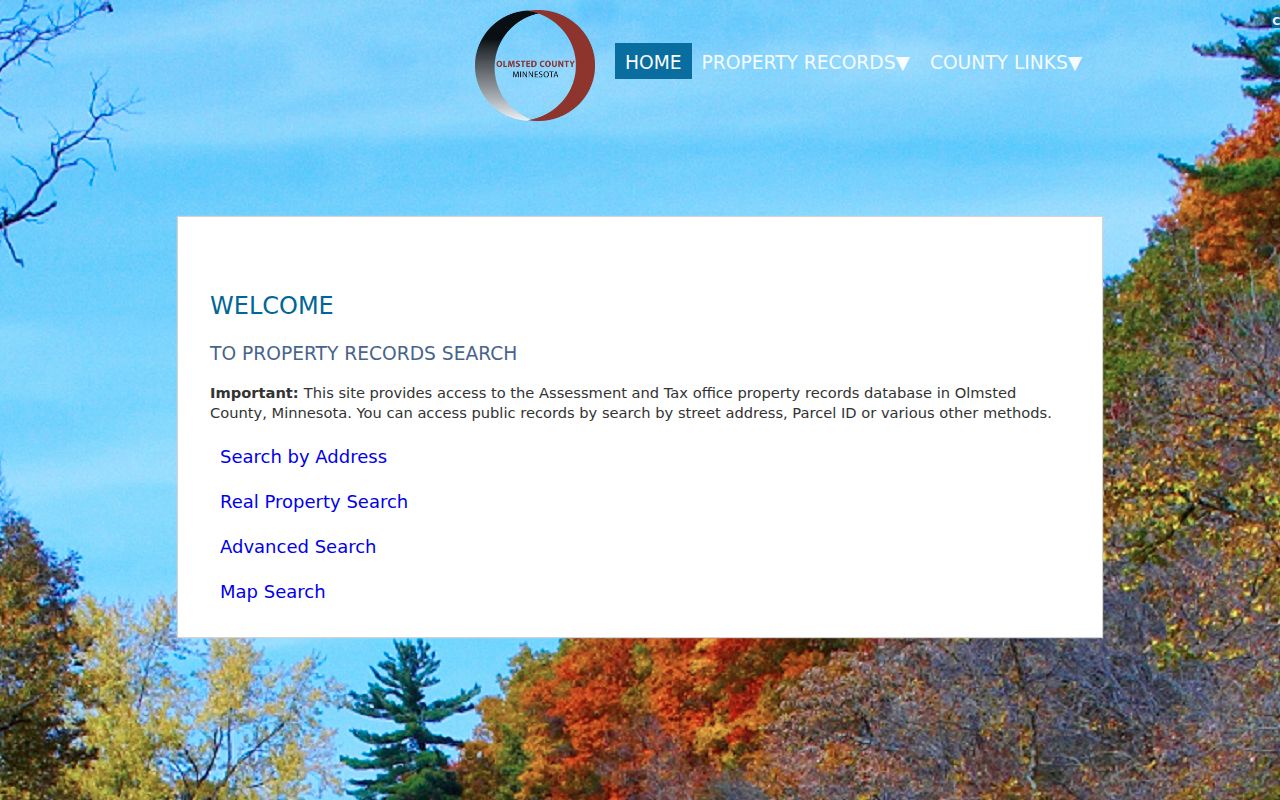
Each path is a separate entry. The county page splits property, address, real-property, advanced, and map searches that way. A name trail, a parcel trail, and a map trail each return a different but complementary piece of Rochester residents research.
Rochester Residents and the GIS Layers
Olmsted GIS adds the spatial layer. A bare property result cannot show parcels, address points, street centerlines, city limits, zoning, districts, aerial imagery, or retired-address information, but the public map and ArcGIS services can. Map Search goes further. It offers timing, distance, and unit choices, plus parcel center points or polygons. Select By Buffer returns a current-list path. Together these tools test whether a Rochester street, parcel, or city-limit label has changed.
The retired-address layer is a local quirk worth checking whenever a modern address refuses to match a directory or deed. Keep old street labels with the current parcel. A map proves geometry and address continuity. It cannot turn a parcel into a list of everyone inside it, and no GIS layer changes that.
Rochester Resident Registration Checks
Checking a specific Rochester name? The Minnesota voter registration lookup wants first and last name, a full date of birth, and either a ZIP code or county address details. The county route adds city or township, house number, and a chosen street. A unit number appears only when the address calls for one. Records refresh nightly. A brand-new registration may lag behind processing before it shows up, and a blank result can mean a typo, a timing gap, or protected status rather than a missing voter.
Minnesota Statutes section 201.091 governs what voter information becomes public. A person-by-person web match is not a street directory. The fuller list is restricted by requester eligibility, permitted use, delivery controls, and limits on publication or sale. Protected voters can be withheld entirely. So never guess why a Rochester name fails to appear.
Minnesota's voter lookup makes its requirements plain, since the identifying fields and the address route must be filled before the search does anything useful.
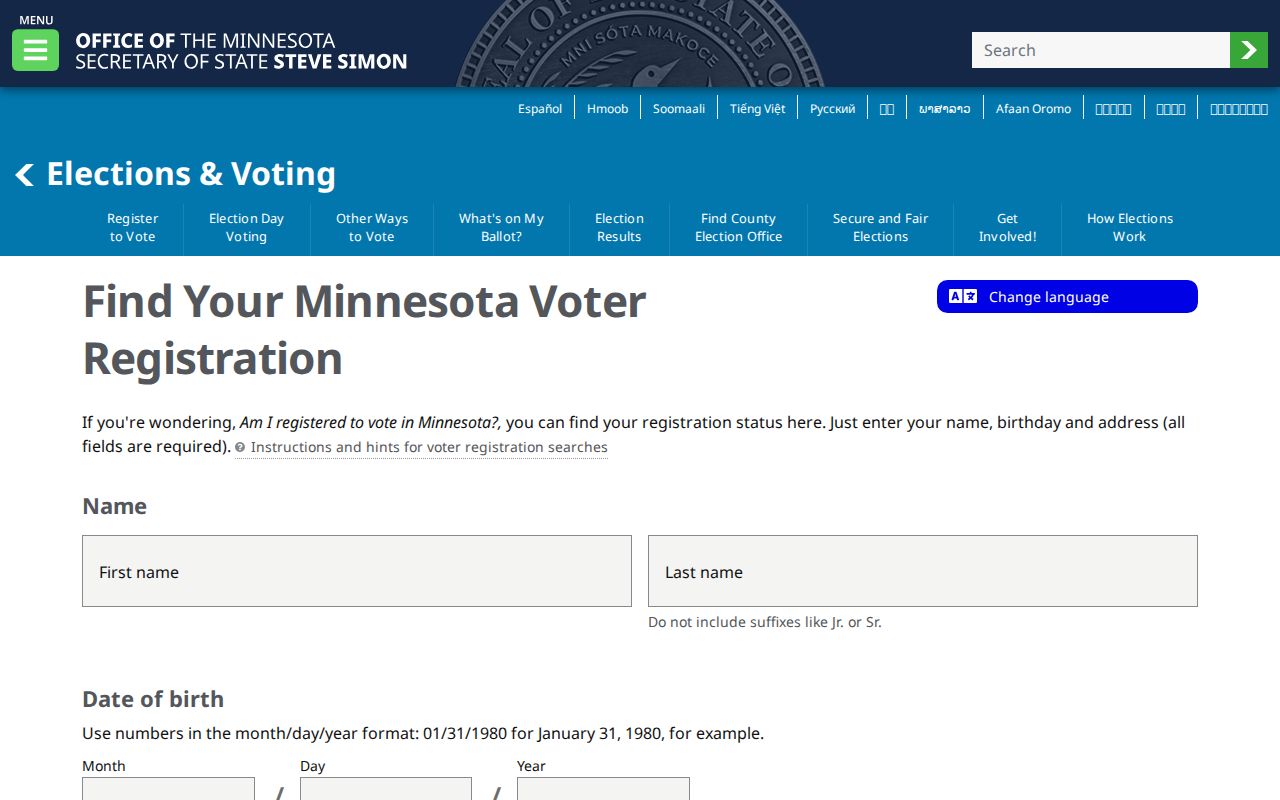
Treat the form's field rules as a way to settle one exact name-and-address question. A Rochester residents directory answer, not a broad resident roster, is what this tool delivers.
Rochester Deed Names and LandShark
For Rochester property research, Olmsted County sells recorded-document access through a paid service called LandShark. Start with the current Rochester owner and legal description. Find the purchase deed where that owner is the grantee. Then search the seller as an earlier grantee, stepping back deed by deed. Recorded names include grantors, grantees, trustees, and entities. A hit proves a title relationship rather than residence. The Rochester legal description also matters, because subdivisions, plats, and addresses can change over time.
The county posts separate subscription and occasional-user prices. It also posts fees for detail pages and copies, staff research, and certified-copy options. It names no verified start year for the Rochester online index. If the electronic trail runs out, ask Rochester Recording & Abstracting about older books and counter research. Don't assume the title history simply ended. LandShark's terms ban data mining, bulk downloading, resale, and alteration of Rochester index material.
- Parcel
- A county-defined piece of land used for assessment and mapping.
- Index
- A search aid that points to a record; it is not always the record image.
- Grantor and grantee
- The party transferring an interest and the party receiving it in a recorded instrument.
- Criss-cross directory
- An address-order directory section used to find historic occupants by street number.
Current Rochester Resident Directory Sources
No single master file exists. Current Rochester resident clues come as a set of narrow records. A Rochester property portal shows tax and parcel relationships. Voter registration confirms a constrained match. A court index reports only a party role. License and business profiles reveal an affiliation or status. City permits can tie an application to an address. Treat every source as one clue. Each needs corroboration before it supports any Rochester residents directory conclusion about identity.
| Rochester source | What it can confirm | Custodian | Access limit |
|---|---|---|---|
| iasWorld property record | Owner or taxpayer, parcel, situs, mailing context | Olmsted County | Current certified assessment, not occupancy proof. |
| Voter registration lookup | Registration match and address-input status | Minnesota Secretary of State | Known-person inputs; protected records are withheld. |
| MCRO | Party role, case date, status, and public filings | Minnesota Judicial Branch | Unofficial and restricted by case type and date. |
| City Citizen Access | Permit or application connection to an address | City of Rochester | An applicant or contractor is not an occupant. |
| Professional and business records | Public credential or filing affiliation | State boards and Secretary of State | Do not treat an office or agent address as a home. |
Matching one person carefully is different from browsing. A careful Rochester resident lookup follows the name-to-record workflow and never stretches a property, voter, or court hit past what it actually proves.
Rochester Resident Court and Vital Trails
Minnesota Court Records Online, better known as MCRO, searches Rochester cases by person, business, attorney, or case number. It also covers citation, hearing, or judgment. A common Rochester name needs narrowing. Add Olmsted location, filing date, case category, status, and any visible co-party to cut the noise. Add any case number too. A Rochester result can display a case number, parties, category, and filing date. It also shows status, register of actions, and public documents. Some material stays hidden by design, including public party street addresses and restricted case categories.
Vital and historical indexes deserve the same restraint. Minnesota birth records stay confidential for 100 years. Death informational records are public. The MOMS marriage index covers participating counties. Rochester divorce decrees come from the granting court. An index hit can guide an order, but it is not a certified copy. Rochester's License Bureau and the state vital-record office handle ordering for their respective record types.
Rochester Resident Leads From State Lists
Minnesota's unclaimed-property search is a narrow but genuine Rochester name lead. It accepts last or business name, first name, city, ZIP Code, or property ID. A Rochester match signals an unresolved claim, not current residency. The state also runs official license lookups. The DLI license lookup includes holder and complete-number paths. It publishes downloadable license data nightly, and it can confirm a Rochester professional credential without ever hinting at a home address.
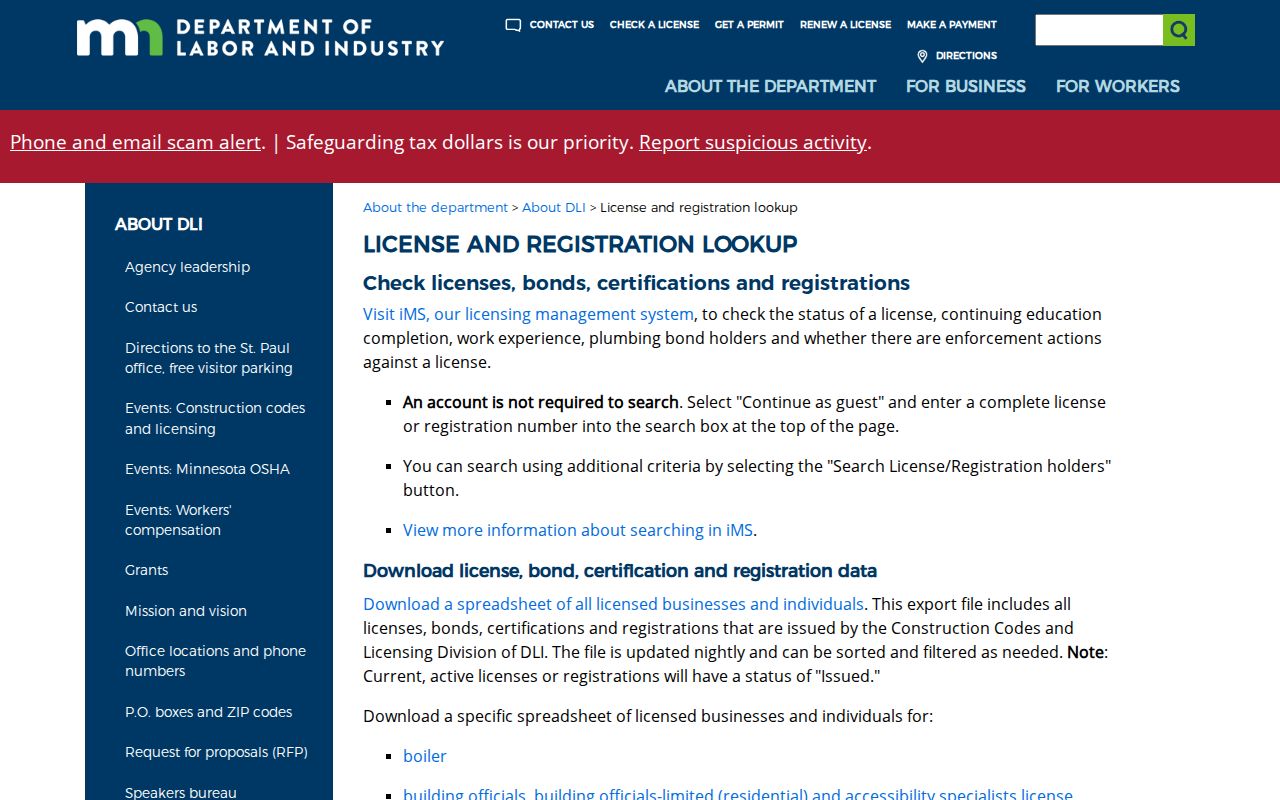
Label a license result as a credential clue. Nothing more. Check it against the issuing agency, the status, the visible city or ZIP field, and the record date before it earns a place in any Rochester resident lookup.
| Official record | Best use | Why it is limited |
|---|---|---|
| Government and archive indexes | Confirm a named role, event, or source date | Each has a defined scope and access rule. |
| Commercial compilation category | Possible lead requiring independent checks | Entries may be stale, merged, or inferred. |
| Custodian copy or terminal | Verify the record and request a certified copy when permitted | Fees, redactions, and eligibility can apply. |
Rochester Records Requests and City Files
The Rochester City Clerk's records menu includes the Public Records Center, Laserfiche, Citizen Access, and OpenGov. It also lists city record categories no people index covers. Rochester Citizen Access allows anonymous searching. Its modules cover Building Permits, City Planning, City Licensing, and County Planning. A permit search works by permit number. Address mode takes a building number and street name. A permit proves an application, inspection, owner, or contractor connection. It does not prove who lived there. Rochester's records page names the City's request and public-document routes.
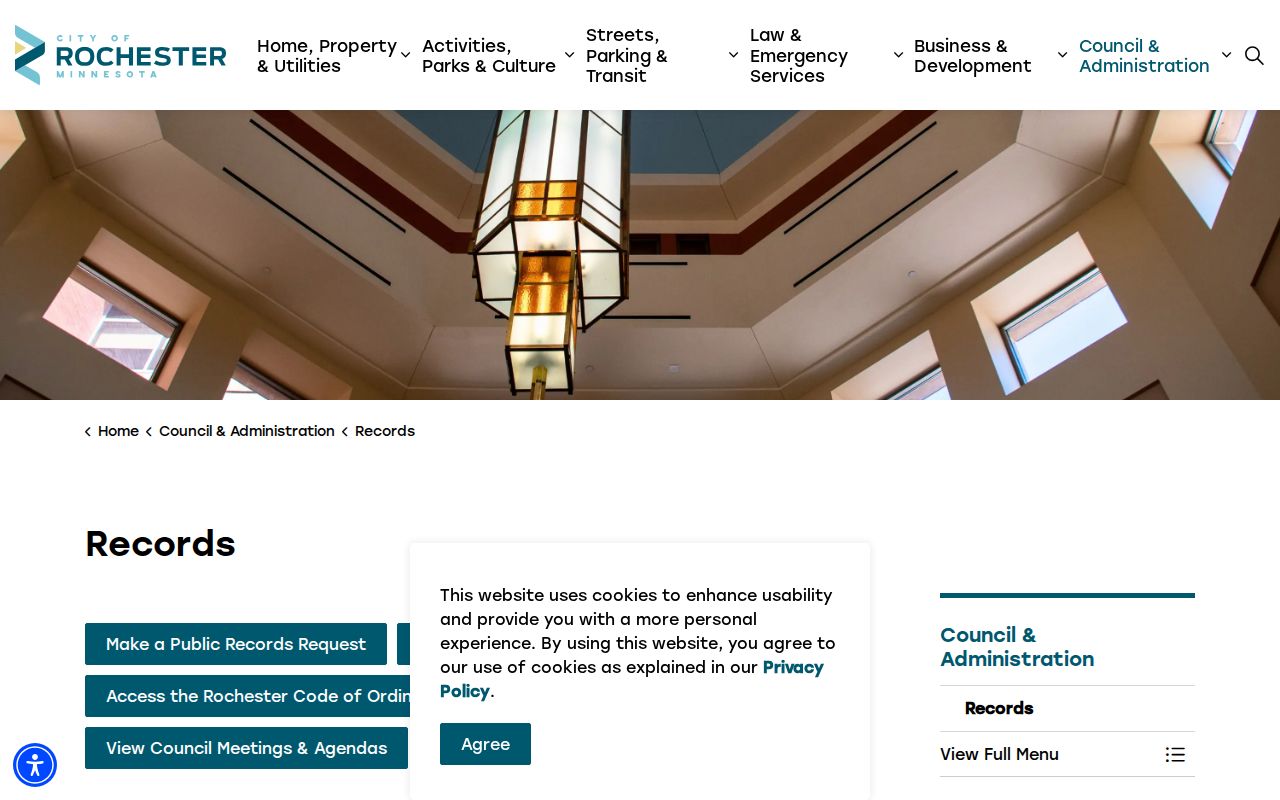
The Minnesota Government Data Practices Act presumes data is public but lets other law classify records as private. Inspection is generally free at reasonable times. A strong request names the record and its custodian. A vague people search is not something the law requires.
Historical Rochester Residents in Local Collections
Rochester Public Library anchors the city's historical shelf. Old directories, obituaries, newspapers, maps, yearbooks, cemetery files, church records, and local history all sit in its collections. The Rochester Digital History portal opens ResCarta collections. These include City Directories, Maps, Obituaries, school material, Rochester history, and Post Bulletin content. You can search it or browse by collection, title, creator, place, year, topic, or date range. Coverage differs from one collection to the next. Keep the collection name and date with any result you pull. A stray directory entry means little without them.
RPL also documents Rochester newspapers from 1859 to 1925 in the Minnesota Digital Newspaper Hub. Post Bulletin microfilm runs from 1925 forward. The full local shelf run, publisher sequence, reverse-directory years, and final printed directory year remain unlisted in official material. Local-history staff can supply the exact edition and its abbreviation key before you lean on a scan. For the full collection and entry-reading method, the Rochester city directory page lays it out.
Rochester Directory Dates and Street Names
Old Rochester addresses run on their own clock. The city adopted its quadrant system on July 9, 1918. Broadway split east from west; Center Street split north from south. Several older street names survive only as variants tied to modern quadrant naming. That is why a Rochester directory, deed, or newspaper may name a street the current GIS simply will not recognize. A variant search usually bridges that gap.
Sanborn maps set the built-environment clock beside the name trail. The Minnesota Historical Society lists Rochester editions for 1884, 1890, 1899, 1904, 1909, 1914, 1920, and 1928. A bound continuation runs through 1948. A Sanborn plate can show a footprint, a building's use, and its street context. It will never list residents. Pair the map date with a directory, deed, census, or newspaper and the picture sharpens.
Rochester Residents When Online Search Stops
A portal gap in Rochester is not a dead end. The Rochester courthouse public terminals are the right next step. Court Administration can also help with an available court file. For older deed books, Rochester Recording & Abstracting can explain copy options. Paid staff research is another option there when LandShark's documented online coverage is unknown. Each local-history collection holds different material. RPL's local-history room, the Olmsted County Historical Society Wicklund Archives, and Minnesota Historical Society finding aids are not interchangeable. Plan a stop at more than one.
Absences sometimes have a lawful reason. Minnesota Safe at Home keeps certain addresses protected. Protected-voter withholding, protected real-property data, restricted vital records, and limited court access also keep certain information out of public Rochester results. Treat official records as material for personal, lawful research. Never use a record, or a missing result, to stalk, harass, intimidate, or harm anyone.
Use the right custodian. A property, voter, court, library, or archive hit identifies a specific role and date; confirm it with the office or collection that keeps the record.